
A simulated interview is a hypothesis machine
Use a fictional persona to generate questions for real research, not fake validation.
35 minutes estimated—not learner-validated. Original learning materials are free; optional external AI access may require an account, credits or payment.
Start the editable activity →No account needed to begin. Explicit account saving and editable offline export are available in the workspace.
New here? Try the three-activity starter ↗
Why this matters
A language model’s persona reflects learned stereotypes and your prompt. It does not represent actual customers or their subconscious reactions. Define situational needs instead of demographic caricatures, then convert the simulated objections into neutral questions for consented real interviews.
Before you start
Materials are free. External tools may require an adult account, credits, regional eligibility or a paid plan. Check current terms before using them. Do not paste passwords, API keys, private messages or other people’s personal data. No model runs locally or downloads automatically on this platform.
Your illustrated field guide
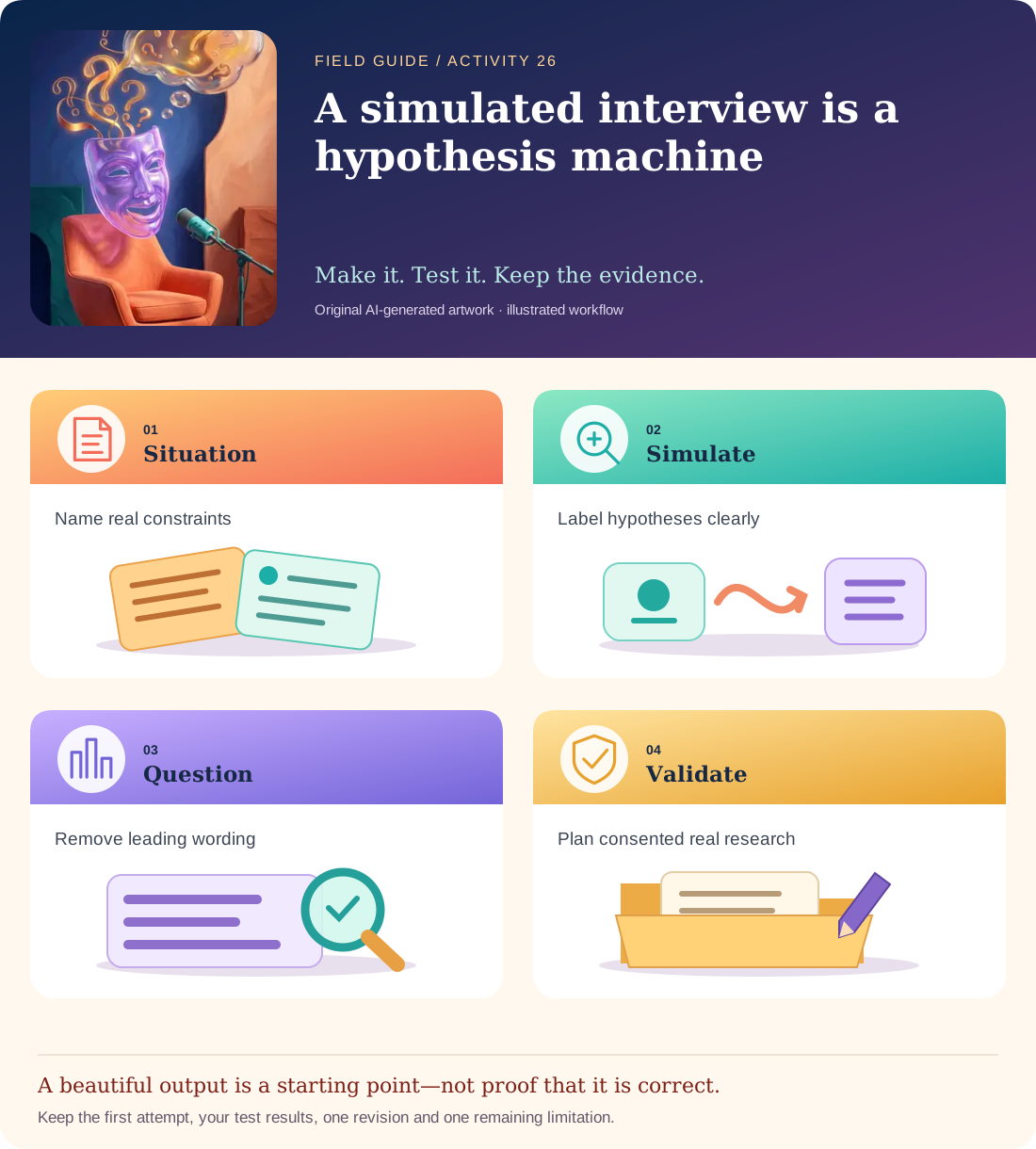
Conceptual illustration, not a provider screenshot. Artwork is AI-generated; instructional labels are authored text.
Start with fictional input
Idea: a kitchen inventory app that suggests meals. Fictional situation: someone has ten minutes to cook, shares a kitchen, dislikes repetitive data entry and uses an older phone. No actual customer interview has happened.
Copy and adapt this prompt
Simulate a skeptical potential user with the stated constraints, without inventing a real identity. Give five possible objections, label them hypotheses, and turn each into a non-leading interview question. Do not claim purchase intent, demographic representativeness or research findings.
Worked reference—not proof of correctness
Hypothesis: entering every ingredient may take too long. Neutral question: “How do you currently keep track of ingredients, if at all?” Leading question to reject: “Wouldn’t automatic inventory save you lots of time?”
Five practical steps
Describe the situation
Use tasks, constraints and current behaviour rather than age/gender stereotypes.
Generate hypotheses
Request five objections with the explicit simulated label.
Convert to questions
Rewrite each objection into a question that does not suggest the desired answer.
Spot invented validation
Remove claims such as “users will love it” or a fabricated willingness-to-pay number.
Plan real research
Write a consented interview plan, recruitment limits and what would disconfirm the idea.
Test your result
- All simulated responses are labelled hypotheses, not customer quotes.
- Interview questions avoid selling the idea or implying the answer.
- The plan includes real consented research and a disconfirming observation.
Mistakes to watch for
- Reporting a model’s persona output as market validation.
- Using stereotyped demographics as a substitute for actual needs.
Offline / no-key route
Brainstorm objections yourself and turn them into neutral questions; no simulated participants are needed.
Reflect
What observation from a real person would contradict the most attractive simulation result?
Keep your notes, tests and self-review →Self-reported practice is not independent assessment or a qualification. Browse all 50 guides · Choose a tool